CHF 35.- setup — machine setup, file handling and proof approval included


Promotional products are a world of their own in printing. The materials, methods and unit-cost patterns differ from textiles. If you’re ordering mugs, pens, bags, USB sticks or notebooks for your team or as customer gifts, the basic questions are familiar: which method suits the occasion and budget, and which will last? This guide walks you through how we choose at Fabrik4 in Lucerne, using common questions about materials, quantities and decoration.
Five questions before you order
Before comparing methods, answer these five questions for yourself. They’ll help you brief us and often point towards a suitable option.
- What is it for? An employee gift, customer present, trade-fair giveaway, mailing insert or employee onboarding set. The occasion shapes the product choice and quantity.
- What material should the product be made of? Ceramic, glass, metal, wood, plastic or textile. Some methods only work on particular materials.
- How many do you need? 25 pieces for a team call for a different method from 1’000 pieces for a trade fair.
- What should the logo look like? One colour, several colours or photorealistic? Pad printing has limits, and laser engraving cannot produce freely chosen print colours.
- When do you need them? Lead time depends on the product, stock, decoration method and quantity. Tell us your preferred date.
You don’t need every answer yet. Send us the occasion, an approximate budget and your logo, and we’ll suggest a material and method.

Methods for promotional products
Promotional products call for methods beyond textile printing. These are six main groups:
- Pad printing: A familiar method for pens and small plastic or metal parts. Setup is needed for each colour; whether it makes economic sense depends on the design and quantity. The detail possible depends on the product and print area.
- Laser engraving: For suitable metal, wood and other surfaces. The laser changes the material or its coating; we check contrast and durability on the product.
- Direct UV printing: Multicolour printing on suitable smooth surfaces. Adhesion, setup and cost effectiveness depend on the product and quantity.
- Sublimation: For polyester-coated promotional products, such as white mugs, mouse pads and sports items. The available print area and cost depend on the product.
- Foil stamping and hot stamping: For notebooks, leather goods and premium folders. They create a gold- or silver-foil effect with a sense of depth.
- Direct printing and screen printing on textiles: For totes, laundry bags and promotional aprons. These follow the same principles as textile printing.
For a broader comparison of methods, see our guide to comparing printing methods. Here we focus on what makes promotional products different.
Materials: which methods suit which surfaces
| Material | Best choice | Also possible | Check carefully |
|---|---|---|---|
| Ceramic (mugs) | Sublimation or direct printing | Check engraving only on a suitable model | Pad printing: check suitability and care |
| Glass | Direct UV printing or a sandblasted look | Laser engraving (matte effect) | Sublimation only with a suitable coating; check pad printing |
| Metal (steel, aluminium) | Laser engraving | Direct UV printing, pad printing | Sublimation only with a suitable coating |
| Wood | Laser engraving or direct UV printing | Foil stamping | Pad printing: check the surface and primer |
| Plastic | Pad printing or direct UV printing | Laser engraving (marks the surface) | Sublimation only with a suitable coating |
| Leather and imitation leather | Laser engraving or foil stamping | Direct UV printing | Sublimation only with a suitable coating |
| Textiles (bags, mouse pads) | Screen printing, DTF, embroidery | Sublimation on polyester | Laser engraving |
This table is a guide. For coated or unusual surfaces, we check the product specifications and, if needed, a sample.
Choosing by occasion
The occasion shapes the product choice and quantity. Here are possible combinations for different uses.
Employee onboarding set
A typical mix is a notebook, pen, mug and bag, often with a T-shirt or polo. You set the quantity and budget for your team. We compare the decoration method with the chosen material and design for each item.
Trade-fair giveaways
Quantity depends on expected visitors and budget. Unit price matters. Options include pad-printed pens, small notepads and simple prints on bags. Setup costs can be spread over a larger order. For premium trade fairs, such as architecture or industrial B2B events, consider laser-engraved metal pens or UV-printed power banks.
Customer gift
Quantity and finish depend on the recipients and budget. A personal touch might be an individual name or message. Options include laser engraving on wood or leather, foil stamping on notebooks and sublimated mugs.
Mailing insert
Flat, light and inexpensive per piece. Options include printed magnets, notepads and thin sticker sets. Logistics matter as much as printing: will it fit in the envelope?
Club event or local promotion
Often fewer than 100 pieces, perhaps with a regional connection. Consider bags with the club logo, mugs with members’ names or drinking cups for a hiking day. For small quantities, we can check sublimation or UV printing if the product is suitable.
Pad printing

Pad printing is a common method for small, round or irregularly shaped products. A silicone pad picks up ink from an etched printing plate and transfers it to the item. We check whether the ink and surface are compatible on the actual product.
Strengths: Fine detail can be possible, depending on the design and print area. Setup costs can be spread over larger quantities. It works on curved surfaces that are difficult for other methods.
Limitations: Setup is needed for each colour, including etching the plate and preparing the machine. It can weigh heavily on small orders. The practical number of colours depends on the design and item; full-colour photos are not possible.
Suitable for: Pens, lighters, key rings and small plastic promotional products. We check the practical quantity against the product and design.
Laser engraving

Laser engraving changes the material instead of applying ink. A laser beam burns or alters the surface to create a permanent mark. On metal this often looks matte; on wood it is charred; on leather it creates a dark line. On suitable materials, the lack of applied ink can make the mark durable. The result depends on the surface and how the item is used.
Strengths: A durable mark on suitable metal, wood and leather surfaces. Setup depends on the product; there are no print colours to choose for each design, only the colour of the mark itself. Very fine detail can be possible.
Limitations: Monochrome only. Results on plastic can be uneven, and marks on light fabric can be hard to see. Laser engraving on glass produces a matte mark, not colour.
Suitable for: Metal pens, wooden key rings, leather notebooks, stainless-steel drinking bottles and premium promotional products.
Direct UV printing
Direct UV printing can reproduce detailed designs on suitable surfaces. UV-curing inks are printed directly on the item and cured with UV light. The result is dry immediately and can reproduce full colour. Adhesion depends on the material and finish.
Strengths: Full-colour printing. We check setup and adhesion for each product. Plastic, wood, glass, metal and coated card may be suitable, depending on the surface. Sharp outlines are possible.
Limitations: Dishwasher suitability depends on the mug and printing system. Printing on heavily used items may wear. We compare durability for the specific product and method.
Suitable for: USB sticks, power banks, wooden items, glass drinking bottles and small orders with photorealistic logos.
Sublimation on promotional products

Sublimation works on promotional products much as it does on polyester textiles: the design is printed on a special transfer sheet, then applied with heat so the dye enters the polyester coating. Typical examples are white or light-coloured polyester-coated mugs, drinking bottles, mouse pads and coasters.
Strengths: Full colour is possible. Sublimation can be durable on suitable coated products. Dishwasher suitability, print area and cost depend on the model.
Limitations: It works only on promotional products with suitable polyester material or coating. Light colours disappear on dark materials. Glass, uncoated metal and uncoated wood are unsuitable.
Suitable for: Mugs, drinking bottles, mouse pads, coasters and polyester promotional folders.
Embroidery and printing on textile products
Totes, laundry bags, aprons and small promotional blankets follow the same principles as textile printing. Embroidery, screen printing, DTF or film transfers may suit them, depending on the fabric, design and desired finish. For more detail, see our comparison of printing methods.
The possible quantities and methods for textile promotional products depend on the model, design and production. Once checked, differently decorated items can also be combined in a set.
Mugs and drinkware

How to choose:
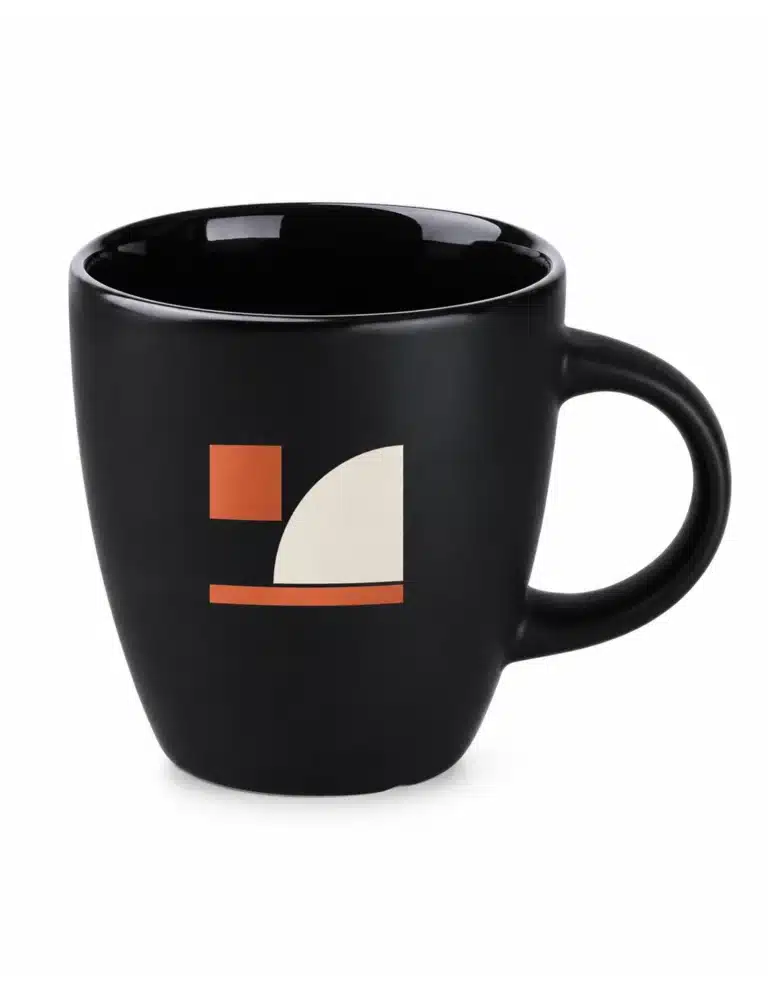
- Classic white ceramic mug: Sublimation if the coating is suitable. We check colours, care and possible quantity for the specific mug.
- Coloured mug or coloured inside and outside: Direct printing with a white base layer or pad printing.
- Stainless-steel insulated cup: Laser engraving is a common option; UV printing may work for full colour.
- Glass mug or drinking glass: Direct UV printing or a sandblasted, matte look.
- Bamboo mug or wooden cup: Laser engraving. UV printing only on a suitable coated bamboo version.
Dishwasher suitability is often decisive for mugs. Ask us for the care instructions for the exact model before ordering. We can also check whether a sample is possible.
Pens and stationery

Pens are a familiar promotional product. Pad printing and, depending on the material, engraving are possible methods.
- Plastic pens (classic promotional ballpoints): We compare pad printing and UV printing against the model, design and quantity.
- Metal pens (aluminium, stainless steel): Laser engraving. The appearance of the mark depends on the metal and finish.
- Wooden pencils: Pad printing or laser engraving, depending on the look you want.
- Highlighters and felt-tip pens: Pad printing is a common option.
- Premium writing instruments (fountain pens, higher-priced ballpoints): Laser engraving on stainless-steel or other metal surfaces.
USB sticks and power banks

USB sticks and power banks can be higher-end promotional products. How long recipients use them depends on their needs and the product. Decoration options:
- Plastic USB stick: Pad printing or direct UV printing. UV printing can reproduce full colour.
- Metal USB stick: Laser engraving for a marked-metal look.
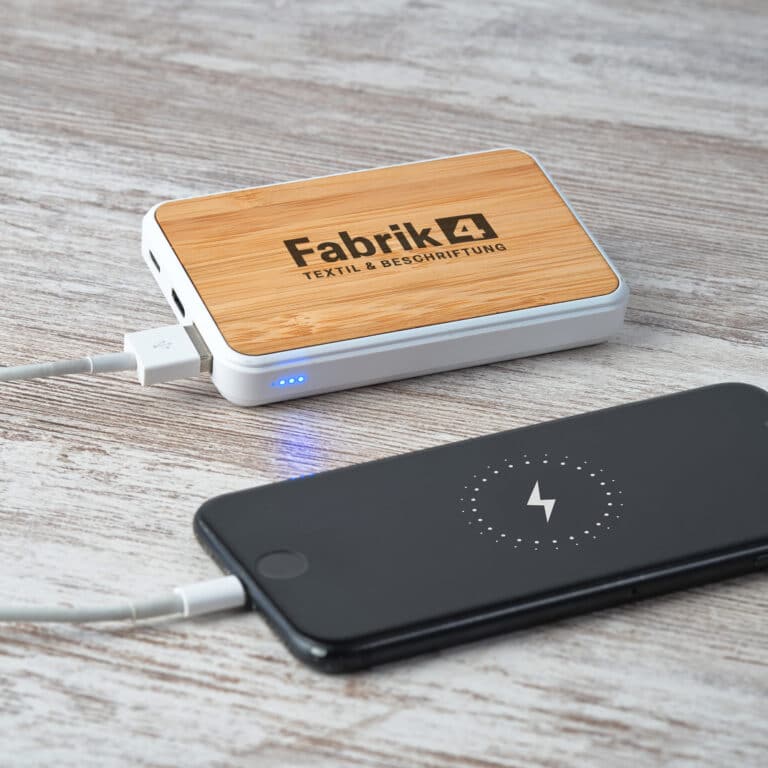
- Plastic power bank: Direct UV printing is a common option, especially on a white surface.
- Aluminium power bank: Laser engraving is a common option.
Storage capacity is another consideration for USB sticks. The right capacity depends on the intended files and connectors. We compare storage and decoration costs for the actual model.
Notebooks and calendars
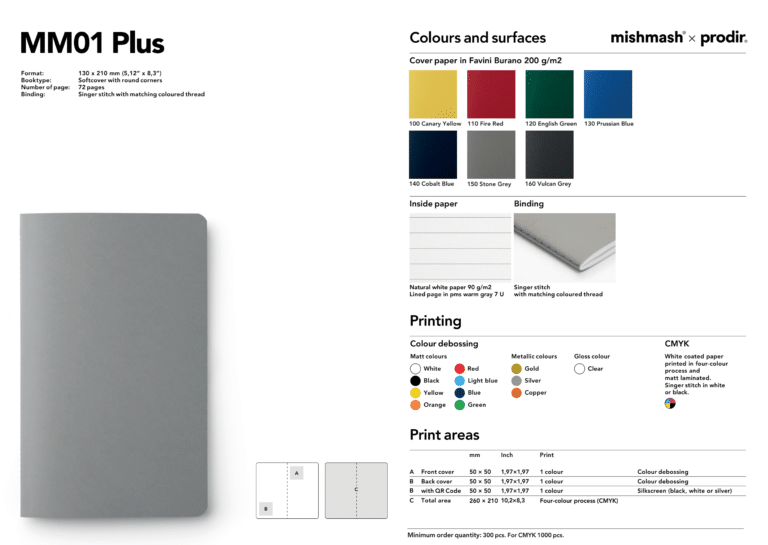
Notebooks often feature in employee onboarding sets and higher-end customer gifts. Choose a method to suit the cover material:
- Imitation-leather cover (premium): Gold- or silver-foil stamping for a premium look. Laser engraving may suit logos with fine lines.
- Genuine-leather cover: Laser engraving is a common option; foil stamping can suit premium editions.
- Card or kraft-paper cover: Direct UV printing, or pad printing for smaller logos.
- Fabric cover (bookbinding): Embroidery or screen printing.
For wall or desk calendars, often given at the turn of the year, UV printing may be possible depending on the surface. We check durability and cost for the model.
Bags and totes

For bags, the material helps determine the decoration method:
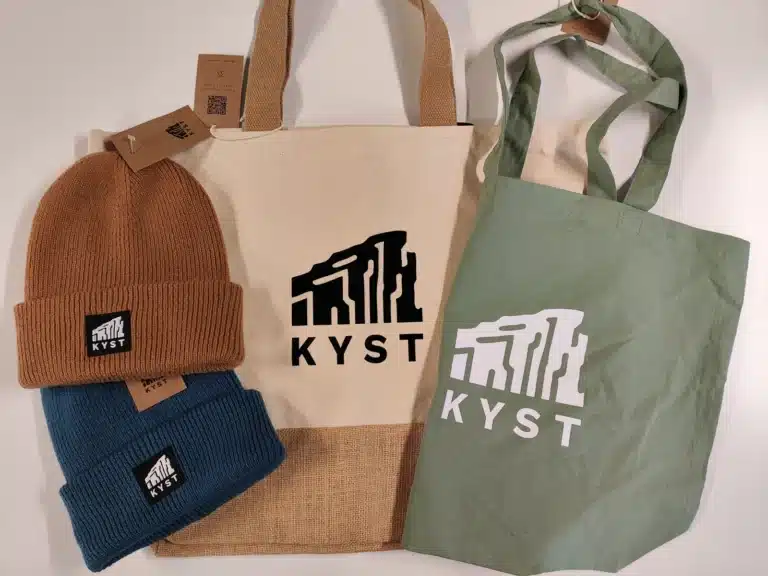
- Jute bags: Screen printing or embroidery, depending on the texture, design and quantity.
- Cotton bags: Screen printing or DTF. We check possible quantities for the model.
- Polyester bags: Sublimation for full colour, or screen printing.
- Plastic carrier bags: Pad printing or film lamination.
- Laundry bags and travel sets: Screen printing or direct embroidery.
Embroidery can suit small logos. For large, detailed designs we check DTF or another printing method. Durability and care depend on the bag and decoration.
Seasonal ordering patterns
Demand for promotional products has seasonal peaks. Asking early gives us more time to check stock and delivery dates.
- Q4 (September to December): Demand may rise ahead of Christmas gifts and year-end mailings. Confirm the model and preferred date early, as stock and decoration capacity vary.
- Q1 (January to March): Employee onboarding sets for the new business year and the start of trade-fair season. Check event dates and availability early.
- Q2 (April to June): Club events, summer promotions and outdoor events. For fixed events, it pays to confirm timing early.
- Q3 (July to September): Start of the school and club seasons, plus autumn trade fairs. Tell us your preferred date early for summer and autumn campaigns too.
Lead time depends on the item, stock, decoration method and quantity. Send us your preferred date so we can check the options.
Minimum quantities and lead times
| Method | Minimum quantity | Standard lead time | Express possible |
|---|---|---|---|
| Pad printing | On request | Subject to availability | On request |
| Laser engraving | On request | Subject to availability | On request |
| Direct UV printing | On request | Subject to availability | On request |
| Sublimation only with a suitable coating | Depends on the mug model | Subject to availability | On request |
| Foil stamping | On request | Subject to availability | On request |
| Embroidery (bags) | On request | Subject to availability | On request |
Possible quantities and costs depend on the item and method. For small runs we can check DTF or UV printing; for larger runs we also compare pad and screen printing.
Planning example: an employee onboarding set
Planning example: A trades business wants an onboarding set for existing and new employees. Each set contains 1 polo with company embroidery, 1 cap with flock printing, 1 white ceramic mug, 1 laser-engraved aluminium pen, 1 notebook with an imitation-leather cover and 1 jute bag with a screen-printed logo.
Method choice: embroidery on the polo (see our workwear guide), flock printing on the cap (see our cap guide), sublimation on the mug, laser engraving on the aluminium pen, foil stamping on the notebook and screen printing on the jute bag.
In this planning example, lead time and set price depend on the chosen items, stock, quantity and decoration. We cannot promise in advance how employees will use the items.
Frequently asked questions
Can I order different promotional products with different logos in one order?
Yes. We can put together onboarding sets or customer gifts where each item uses its own decoration method. We clarify setup costs for each item, design and method in the quote.
Which promotional product gets noticed most?
That depends on your audience and how they use the item. Choose a model that suits the occasion and recipients.
Which promotional product has the lowest unit price?
A simple ballpoint pen or sticker can be inexpensive at a suitable quantity. We’ll quote the unit price including printing and setup for the actual model.
Can you deliver promotional products directly to recipients?
We can check direct shipping and individual addressing against the item, quantity and recipient list. Send us your shipping requirements.
Can I order more sustainable promotional products?
Depending on the product, material alternatives may include recycled paper, organic cotton or reusable drinking bottles. Manufacturing, useful life and actual use also matter. Ask us about available options and their supporting evidence.
What happens if there’s a complaint or printing error?
Before production, we agree the artwork and proof for the specific order. If something goes wrong, we assess the cause and solution against that approval and the agreed order terms.
What are typical setup costs?
Setup costs depend on the item, design, method and quantity. Even for repeat orders, we check whether existing artwork can be reused and what costs apply.
Can you supply items wrapped with a card or insert?
We can clarify packaging, inserts and assembly for the set you want. Tell us the finish and quantity so we can quote.
Explore each product category
We have separate workshop guides for each promotional-product category, covering materials, methods, quantity considerations and examples. If you want to look closer at a category, start here:
- Printing on mugs: Sublimation, laser engraving and UV printing. Which method suits which mug?
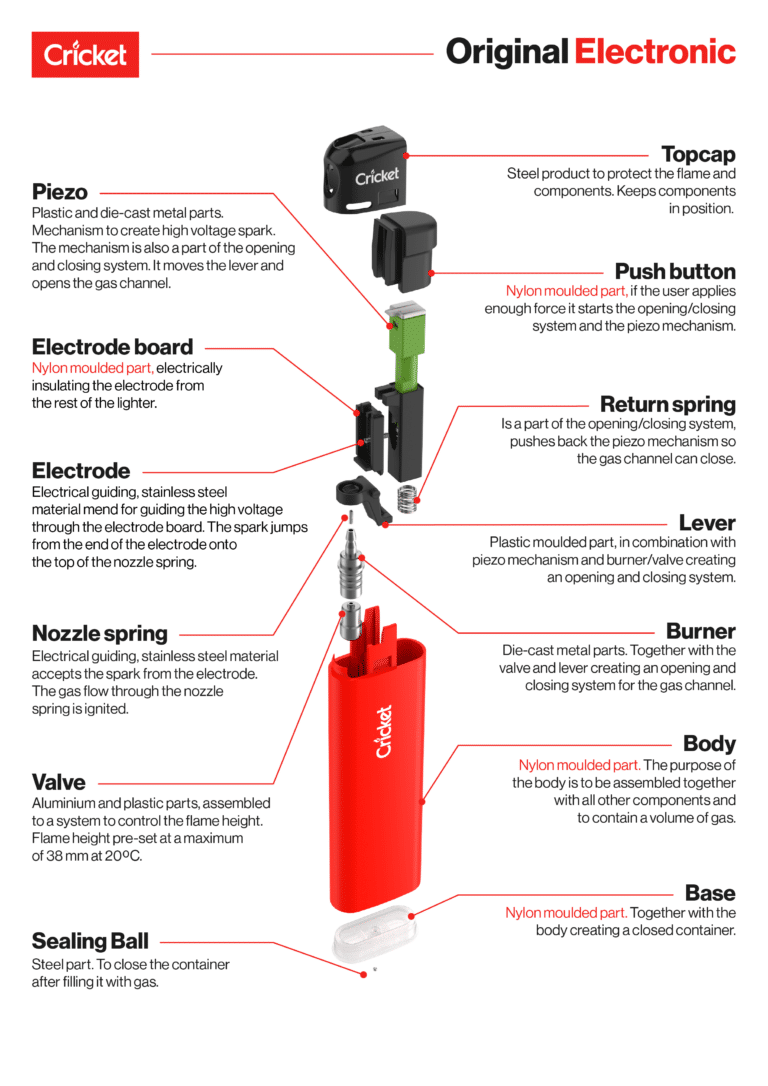
- Printing on lighters: Cricket models and premium aluminium options. Pad printing, digital sleeves and laser engraving.
- Printing on ballpoint pens: Swiss-made Prodir and classic promotional pens. DS range, QS-Stone and aluminium.
- Personalising notebooks: Genuine leather, PU imitation leather and recycled card. Blind and foil embossing, screen printing and laser engraving.
- Printing on bags: Jute, cotton and recycled materials. Screen printing, DTF and embroidery.
- Branding USB sticks and power banks: Tech promotional products in plastic, aluminium and wood. Laser engraving, pad printing and UV printing.
Each related guide includes a model-choice table by use, details on the strengths and limits of each method, and a clearly labelled planning example.
Promotional products for your team or campaign?
Send us the occasion, the items you have in mind, quantity and logo. We’ll check materials, methods, availability and costs, then send you a quote. We’ll also check whether a sample makes sense and is possible for the set.
This overview draws on our workshop practice and was prepared in the Fabrik4 Lab for publication.